AI Ethics & Policy
-
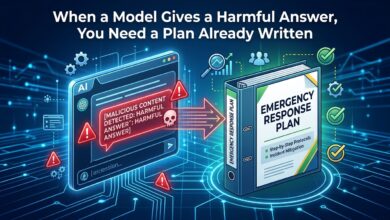
When a Model Gives a Harmful Answer, You Need a Plan Already Written
Traditional incident response assumes a system is either working or broken. A model producing confidently wrong output is neither, and…
Read More » -
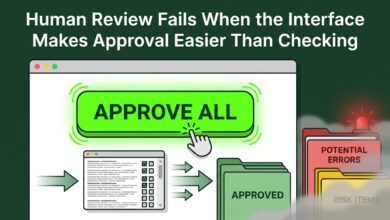
Human Review Fails When the Interface Makes Approval Easier Than Checking
A human in the loop only provides oversight if that person has the time, information and incentive to actually disagree…
Read More » -

AI Regulation Arrived: What Engineering Teams Actually Have to Do
AI regulation is now operational reality in several jurisdictions. Most obligations translate into documentation, testing, and logging requirements that engineering…
Read More » -

You Cannot Audit a Model Whose Training Data You Cannot Describe
Questions about bias, licensing and consent all reduce to the same prerequisite — knowing what went into the model in…
Read More » -
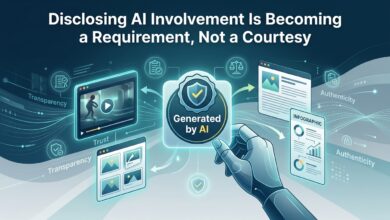
Disclosing AI Involvement Is Becoming a Requirement, Not a Courtesy
Multiple jurisdictions now mandate telling people when they are interacting with a system rather than a person, or when content…
Read More » -

Model Portability Is an Architecture Decision Made on Day One
Prompts tuned to one model's quirks, provider-specific tool formats and proprietary embeddings each raise the cost of ever switching.
Read More » -
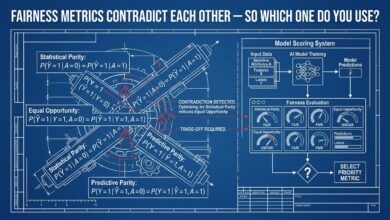
Fairness Metrics Contradict Each Other — So Which One Do You Use?
Mathematical fairness definitions are provably incompatible. You cannot satisfy them all, which means choosing one is a values decision that…
Read More »